The Reliability Gap Hiding Inside Your AI Recruiting Stack
Every HR newsletter this week is selling the same dream. AI “superagents” will run your hiring funnel end to end, from sourcing to scheduling, and your recruiters will simply supervise. Talent leaders are racing to add autonomous AI agents to their teams this year, with vendors pitching “superagents” as the largest HR shift in decades (PR Newswire). But before you hand the funnel over, look at the AI recruiting agent reliability numbers. The math is not on the hype’s side.
Here is the contrarian read for the week. The fastest-growing AI recruiting companies are not the ones promising full automation. They are the ones keeping humans firmly in the loop.
What the reliability research actually found
A recent evaluation framework for enterprise agents, the CLEAR study, audited 12 major agentic benchmarks (arXiv). It tested six leading agents across 300 enterprise tasks. The findings are blunt. Agents show a 37% performance gap between lab benchmarks and real production. Reliability, measured as consistency across repeated runs, drops from roughly 60% to 25%.
Then there is the compound-failure problem. Say an agent is 85% reliable at each step. A 10-step workflow still succeeds end to end only about 20% of the time, because errors multiply at every handoff. A recruiting funnel is rarely fewer than eight steps. Source, screen, rank, message, schedule, follow up, and so on. So an agent that looks sharp in a demo can quietly break across a real pipeline.
That is the AI recruiting agent reliability story the launch announcements skip. And it explains a pattern in the market. Contrario, one of the fastest-growing AI recruiting platforms, crossed $6M in annualized revenue in under six months by pairing vertical AI agents with human recruiters, not replacing them (VentureBeat). The companies winning right now treat agents as power tools, not autopilots.
What HR leaders should do Monday
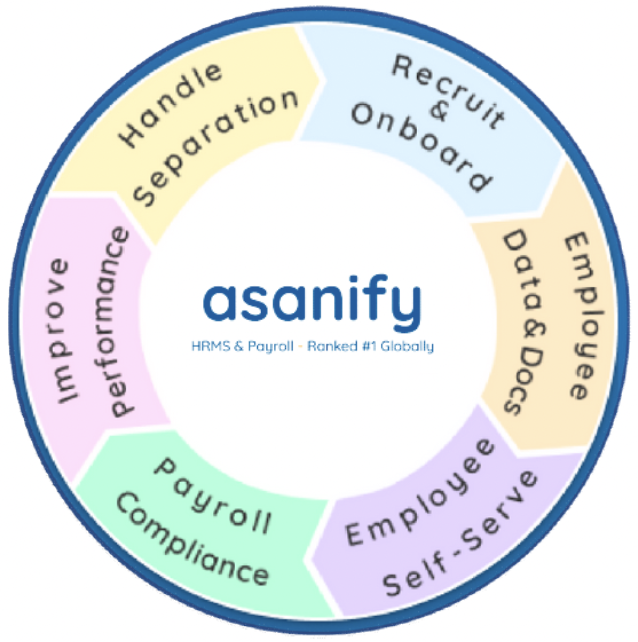
First, map your hiring workflow into discrete steps and decide which single steps are safe to automate. Resume parsing and interview scheduling are low-risk. A go or no-go decision on a candidate is not. Second, when a vendor pitches an autonomous agent, ask for pass@k reliability data, not demo accuracy. If they only show you a clean demo, you have your answer. The teams already running AI agents for HR well are the ones who scoped them narrowly and kept a human on every decision that touches a person’s career. A clear full cycle recruiting map makes those automate-or-not calls much easier.
India Steps Onto the VivaTech Stage as AI Partner Country
India will be the Official AI Country Partner at VivaTech 2026 in Paris, running June 17 to 20, with the largest national pavilion at the show (IBEF). The pavilion ties into the India-France Year of Innovation 2026 and spotlights startups across AI, deeptech, and SaaS.
So what for you? If you hire across the India-Europe corridor, this is a signal worth tracking. Deeper bilateral tech ties usually pull talent mobility and cross-border employment along with them. For founders building distributed teams, expect more India-based AI engineering talent looking for global roles, and more European interest in Indian startups. That changes where your next senior hire might come from, and which compliance questions land on your desk first.
A New Frontier Model Lands, and So Does a Price Hike
Anthropic shipped Claude Fable 5 and Claude Mythos 5 on June 9, calling Fable 5 the most capable model it has ever made generally available (Anthropic). Anthropic says the companion Mythos 5 has the strongest cybersecurity capabilities of any model it has built. Pricing sits at $10 per million input tokens and $50 per million output tokens, roughly double the previous flagship.
So what for HR tools? Most of the AI features in your HR stack are built on top of these model APIs. When the frontier price doubles, your vendors face a choice. Absorb the cost, pass it on, or route you to a cheaper model. Raw capability keeps climbing, but capability is not the same as reliability, which loops back to the funnel math above. A model that scores higher on benchmarks still has to hold up across your messy, multi-step workflows.
Workers Want AI to Assist, Not Replace
A workforce audit called WORKBank surveyed 1,500 workers and AI experts across 844 tasks and 104 occupations to map where people actually want automation (arXiv). The headline finding cuts against the superagent pitch. Across most roles, workers prefer AI that augments their judgment over AI that fully takes the task.
So what for you? This is a hiring and retention input, not just a research curiosity. Roll out agents that strip away the meaningful parts of a job, and you risk an engagement hit. That hit often lands before any productivity gain shows up. Pair the reliability caution with this preference data and the design choice gets clearer. Build for assistance first, full AI in HR recruitment autonomy later, and only where the reliability holds.
Quick Hits
- AI talent-sourcing agent Dex reached roughly a $1.8M annualized revenue run rate with over 50 tech customers since it began charging in late 2025 (Fortune).
- Google expects to release Gemini 3.5 Pro this month after Sundar Pichai asked for “until next month,” following the earlier release of Gemini 3.5 Flash (LLM-Stats).
The Bottom Line on Agent Reliability
The agent gold rush is real, and some of it will pay off. But the smart move this quarter is not to hand your funnel to an autopilot. It is to deploy agents where they are reliable, keep humans on every career-affecting decision, and make vendors prove their numbers in production, not in a demo. If you are rethinking your HR stack around AI recruiting agent reliability, Asanify’s HRMS is built API-first, so you can add automation step by step without betting the whole pipeline at once.
FAQ: AI Recruiting Agent Reliability
Are AI recruiting agents reliable enough to run hiring on their own?
Not yet, in most cases. Research on enterprise agents found a 37% gap between lab benchmarks and production performance, and reliability that drops sharply across multi-step workflows. A hiring funnel has many steps, so full autonomy is risky. Keep a human on final decisions.
What is the compound-failure problem with AI agents?
Errors multiply at each step. Even an agent that is 85% reliable per step succeeds end to end only about 20% of the time across a 10-step workflow. Recruiting funnels are long, so small per-step error rates can break the whole pipeline.
How should HR teams deploy AI agents safely?
Automate narrow, low-risk steps like resume parsing and scheduling first. Ask vendors for pass@k reliability data instead of demo accuracy. Keep humans on any decision that affects a candidate’s career, and expand automation only where the reliability holds up in production.
Not to be considered as tax, legal, financial or HR advice. Regulations change over time so please consult a lawyer, accountant or Labour Law expert for specific guidance.