
Quality Management

Intro to Quality Management?
Quality management is a systematic approach to ensuring that organizational processes, products, and services consistently meet or exceed established standards. In HR contexts, it encompasses strategies for improving workforce performance, compliance, and employee experience.
Definition of Quality Management
Quality management refers to the coordinated activities and processes organizations use to direct, control, and improve quality across all operations. It involves setting quality standards, monitoring performance against those standards, and implementing continuous improvement initiatives. The framework typically includes quality planning (establishing objectives), quality assurance (preventing defects through systematic processes), quality control (identifying and correcting defects), and quality improvement (enhancing processes over time). In HR departments, quality management applies to recruitment accuracy, onboarding effectiveness, training program outcomes, performance evaluation consistency, and compliance adherence. Organizations often adopt recognized frameworks like ISO 9001 or Total Quality Management (TQM) principles to structure their quality initiatives. This systematic approach ensures that HR deliverables maintain high standards and contribute to organizational success.
Importance of Quality Management in HR
Quality management transforms HR from an administrative function into a strategic business partner. First, it ensures consistency in HR processes like recruitment, reducing bias and improving hiring outcomes. Second, quality management enhances employee satisfaction by standardizing positive experiences across onboarding, development, and performance management. Third, it supports compliance by establishing documented procedures and audit trails for regulatory requirements. Moreover, quality management drives cost efficiency by reducing errors, minimizing turnover, and optimizing resource allocation. Organizations with strong quality management in HR experience better talent retention, higher employee engagement, and stronger employer branding. The objectives of Human Resource Management align closely with quality principles, emphasizing continuous improvement and strategic workforce development. Additionally, quality management provides measurable metrics that help HR demonstrate its value contribution to organizational leadership.
Examples of Quality Management in HR
Example 1: Recruitment Quality Standards
An organization implements quality management in recruitment by establishing standardized job descriptions, structured interview processes, and consistent evaluation rubrics. They track metrics like time-to-hire, candidate quality scores, and new hire retention rates to continuously improve their hiring process.
Example 2: Training Program Quality Assurance
An HR department applies quality management to learning and development by setting clear learning objectives, using pre- and post-training assessments, gathering participant feedback, and measuring on-the-job application. They analyze this data quarterly to refine curriculum and delivery methods.
Example 3: Performance Review Quality Control
A company ensures quality in performance management by providing manager training on evaluation criteria, implementing calibration sessions to ensure rating consistency, and conducting audits to identify and address biases. Similar to how organizations manage appraisal letters, they maintain documentation standards and review processes.
How HRMS Platforms Like Asanify Support Quality Management
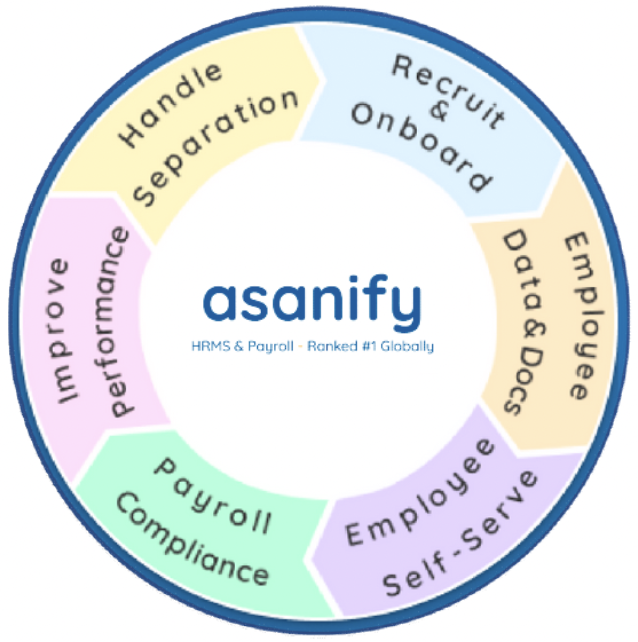
Modern HRMS platforms embed quality management capabilities throughout HR workflows. These systems standardize processes through configurable templates and automated workflows, ensuring consistency across departments and locations. Built-in analytics dashboards track key quality metrics like recruitment effectiveness, training completion rates, and performance review timeliness. HRMS platforms maintain comprehensive audit trails for compliance purposes, documenting every action taken within the system. They enable quality checks through approval workflows, preventing incomplete or non-compliant actions from proceeding. Integration with project management tools helps HR teams coordinate quality improvement initiatives systematically. Additionally, these platforms facilitate continuous improvement by identifying process bottlenecks, generating compliance reports, and providing feedback mechanisms. Employee self-service features ensure data accuracy, while manager dashboards promote accountability for HR quality standards.
FAQs About Quality Management
What are the key principles of quality management?
The key principles include customer focus, leadership commitment, employee engagement, process approach, continuous improvement, evidence-based decision making, and relationship management. These principles guide organizations in establishing systematic quality frameworks across all functions including HR.
How does quality management differ from quality control?
Quality management is a comprehensive approach encompassing planning, assurance, control, and improvement across entire processes. Quality control is a subset focused specifically on identifying and correcting defects in outputs. Quality management is proactive and strategic, while quality control is reactive and tactical.
What metrics should HR track for quality management?
Essential HR quality metrics include time-to-hire, cost-per-hire, employee retention rates, training effectiveness scores, performance review completion rates, employee satisfaction indices, compliance audit results, and internal promotion rates. These metrics provide quantifiable evidence of HR quality and improvement opportunities.
How can small organizations implement quality management without large resources?
Small organizations can start by documenting core HR processes, establishing basic quality standards, implementing simple feedback mechanisms, and conducting regular process reviews. Focus on high-impact areas first and gradually expand. Modern HRMS platforms make quality management accessible without requiring dedicated quality teams.
What is the relationship between quality management and employee engagement?
Quality management directly impacts employee engagement by creating consistent, fair, and transparent HR processes. When employees experience reliable onboarding, clear performance expectations, equitable treatment, and responsive support, their engagement increases. Conversely, engaged employees contribute to quality improvement initiatives through feedback and innovation.
Simplify HR Management & Payroll Globally
Hassle-free HR and Payroll solution for your Employess Globally
Your 1-stop solution for end to end HR Management
- Hire to Retire HR Process Automation
- EOR Services for your Global Employees
- Pay your Contractors Globally in 200+ Countries
Not to be considered as tax, legal, financial or HR advice. Regulations change over time so please consult a lawyer, accountant or Labour Law expert for specific guidance.